
Introduction
Transporting heavy equipment across Miami is a demanding logistics task because the city combines dense traffic, port activity, bridge clearances, active construction zones, tight urban access, and strict delivery schedules. Contractors moving excavators, cranes, loaders, bulldozers, lifts, and industrial machinery need more than a truck with an open deck. They need a coordinated hauling process that protects the machine, the driver, the jobsite schedule, and everyone sharing the road.
For construction companies, safe heavy-equipment movement is directly connected to project performance. A delayed excavator can slow utility work. A late crane can hold up structural activity. A loader arriving without proper unloading access can block crews and create unnecessary downtime. Heavy hauling in Miami works best when transportation is treated as part of project planning, not as a last-minute dispatch request.
Safety Starts With Accurate Equipment Assessment
Every safe heavy-haul move begins with understanding the machine. Contractors and logistics teams need accurate information about equipment length, width, height, operating weight, axle distribution, attachments, center of gravity, loading points, and unloading requirements. These details shape trailer selection, permit classification, route planning, securement strategy, and delivery timing.
A machine that looks routine in the yard can become difficult once placed on a trailer. A raised boom, mounted bucket, blade attachment, counterweight, or extended component can change the loaded height or width. Before transport begins, contractors should confirm whether attachments can be removed, folded, lowered, or secured to reduce risk. Accurate assessment prevents the road from becoming the first place where hidden problems appear.
Trailer Selection Controls Stability and Clearance
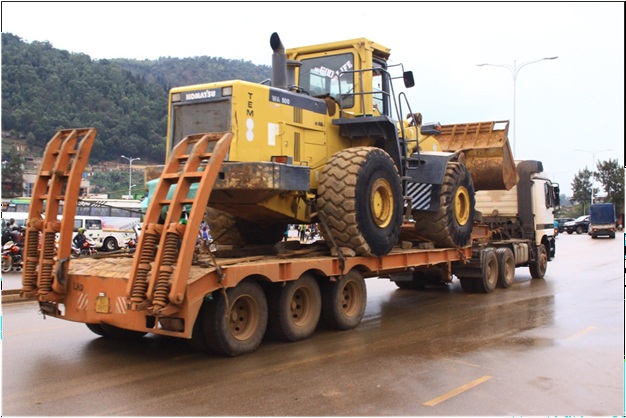
Heavy equipment requires the right trailer for the machine and the route. Flatbeds may work for certain loads, while lowboys, step decks, removable goosenecks, extendable trailers, or multi-axle configurations may be needed for oversized or overweight machinery. The trailer affects loading height, bridge clearance, axle weight, turning radius, securement options, and permit requirements.
Miami contractors should also think about how trailer selection affects jobsite access. A trailer may be legal on the highway but difficult to maneuver through a tight urban street, port-access road, commercial development, or crowded construction entrance. The importance of specialized vehicle deployment appears across different industries, including how mobile medical fleets are redefining access, where vehicle planning, route control, and service readiness all shape successful operations.
What transportation process supports safe heavy-equipment hauling in Miami?
Heavy-equipment transportation in Miami creates operational challenges because machinery dimensions, axle weight, trailer compatibility, permit coordination, bridge clearances, traffic congestion, port-access restrictions, escort requirements, unloading access, and delivery scheduling all affect whether oversized construction equipment reaches jobsites safely and on time for contractors, industrial facilities, commercial developments, and infrastructure projects managing expensive machinery and strict construction deadlines. Contractors and logistics providers address those transportation demands through Heavy Hauling Miami, a specialized freight process that coordinates oversized equipment transport, lowboy and flatbed trailer selection, Florida permit approvals, route planning, dispatch communication, and jobsite delivery scheduling for heavy machinery moving through urban and interstate transportation networks. That coordinated hauling approach reduces transportation delays caused by restricted routes, permit violations, unstable loading, traffic congestion, or fragmented communication between carriers, escort teams, project managers, and delivery locations during oversized freight operations.
Reliable heavy-haul coordination begins with accurate equipment assessment. Cargo dimensions, machine configuration, and total loaded weight determine trailer compatibility, route restrictions, permit classification, and bridge-clearance requirements before equipment leaves the pickup location. Oversized excavators, cranes, loaders, and industrial machinery often require lowboy trailers, escort vehicles, and approved travel windows during transportation through Miami transportation corridors.
Heavy-equipment logistics also depend on timing and communication. Contractors coordinate delivery schedules, unloading access, crane availability, and site readiness before freight arrives because delayed machinery shipments can interrupt excavation schedules, utility installation, concrete work, and other construction phases. Consistent dispatch communication helps project teams reduce downtime while maintaining safe and compliant oversized-load transportation operations throughout Miami and surrounding Florida routes.
Permits and Route Planning Reduce Compliance Risk
Oversized machinery may require Florida permits, approved travel windows, escorts, route checks, or bridge-clearance reviews before movement begins. Permit needs depend on the loaded width, height, length, gross weight, axle spacing, route classification, and local restrictions. Contractors should avoid assuming that a machine can move freely just because it is ready to leave the yard.
Route planning in Miami must consider congestion, bridge clearances, port routes, construction zones, restricted access roads, turning space, and delivery-hour limitations. The safest route is not always the shortest route. A heavy-haul route must be legal, physically passable, and practical for the driver, escort team, and receiving site. When route planning happens early, contractors avoid expensive delays and last-minute rerouting.
Securement Protects the Equipment and the Public
Safe heavy-equipment transport depends on securement that matches the machine. Chains, binders, straps, blocking, bracing, and approved anchor points must be selected according to the equipment’s weight and configuration. The machine should be positioned to support proper axle distribution and stable movement during braking, turning, acceleration, vibration, and road changes.
Securement should be inspected before departure and during transit. A loose binder, shifting attachment, poorly placed chain, or unsupported component can create equipment damage, roadside violations, and serious safety risk. Strong securement is not just a compliance step. It is the steel grammar that keeps the whole transport sentence from falling apart.
Escort Coordination Supports Urban Heavy-Haul Movement
Some oversized equipment moves require escort vehicles to help guide the load through traffic, intersections, narrow corridors, and areas with limited clearance. Escorts warn other drivers, check route conditions, support lane changes, and help the heavy-haul driver navigate turns or hazards. In Miami’s busy road environment, escort coordination can be essential for safe and timely movement.
Escort planning should be connected to permit requirements and dispatch timing. If escorts are not aligned with the approved travel window, the move can be delayed before it starts. Contractors should confirm who is responsible for escort communication, route updates, and delivery-site coordination so that the transportation team operates as one unit.
Dedicated Brand Section
For contractors moving heavy equipment across Miami, Beardown Logistics represents a heavy-haul approach built around planning, compliance, trailer matching, route awareness, and shipment visibility. The brand’s value is strongest when equipment movement requires more than basic carrier availability and must account for urban routing, Florida permit approvals, securement requirements, and jobsite timing.
This kind of transportation coordination helps contractors protect machinery and project momentum. Equipment may be needed for excavation, grading, utility installation, demolition, concrete preparation, lifting, or port-related work. When heavy-haul planning is handled carefully, construction teams reduce downtime and keep the freight process from becoming the weak link in the project schedule.
Jobsite Readiness Prevents Delivery Delays
Safe delivery depends on jobsite preparation. Contractors should confirm entrance width, ground conditions, overhead obstacles, unloading equipment, staging space, traffic control, and the exact placement area before the truck arrives. Heavy equipment should not reach the site while crews are still deciding where the truck can turn, park, or unload.
Clear communication between the driver, dispatcher, escort team, and site manager prevents confusion at the most sensitive part of the move. Miami jobsites can be crowded and fast-moving, especially in commercial developments and infrastructure zones. A prepared site reduces backing risk, unloading delays, traffic conflicts, and detention charges.
Visibility Matters in Port and Urban Logistics
Heavy-haul visibility helps contractors respond before delays become expensive. If traffic congestion, weather, permit timing, or route conditions affect the schedule, the project team needs early updates. This allows managers to adjust crews, prepare unloading equipment, notify subcontractors, and protect the day’s work plan.
The importance of logistics infrastructure is visible far beyond construction, including reporting on how port logistics challenges can affect transportation performance. Miami’s own connection to port activity and urban freight movement makes coordination especially important. Heavy equipment may not move like container freight, but both depend on timing, access, infrastructure, and communication.
Cost Control Comes From Better Preparation
Safe heavy-equipment hauling also supports cost control. Accurate measurements reduce trailer mismatches. Proper permits prevent enforcement delays. Route planning avoids unsuitable roads and bridge issues. Securement reduces damage risk. Jobsite preparation limits detention. Communication prevents crews from waiting for equipment that is not ready to unload.
Contractors can make the process smoother by providing machine specifications, photos, pickup and delivery contacts, access notes, loading details, unloading requirements, and schedule constraints. The more complete the information, the easier it is for the logistics team to build a realistic transportation plan. Heavy-haul surprises tend to be expensive, so the best savings often come from removing uncertainty before dispatch.
Conclusion
Contractors transport heavy equipment across Miami safely by combining accurate equipment assessment, trailer selection, permit coordination, route planning, securement, escort support, dispatch communication, and jobsite readiness. Each step protects the machine, the driver, public roads, project schedules, and the construction teams waiting for the equipment to arrive.
Heavy equipment is too valuable and too schedule-sensitive to move through guesswork. With a coordinated hauling process, contractors can reduce delays, avoid compliance problems, protect machinery, and keep Miami jobsites moving. Safe heavy-haul transportation is not simply about reaching the destination. It is about keeping the project steady while the machine is on the road.