
California’s Redrawn Congressional Maps Clear a Court Challenge Ahead of the Midterms
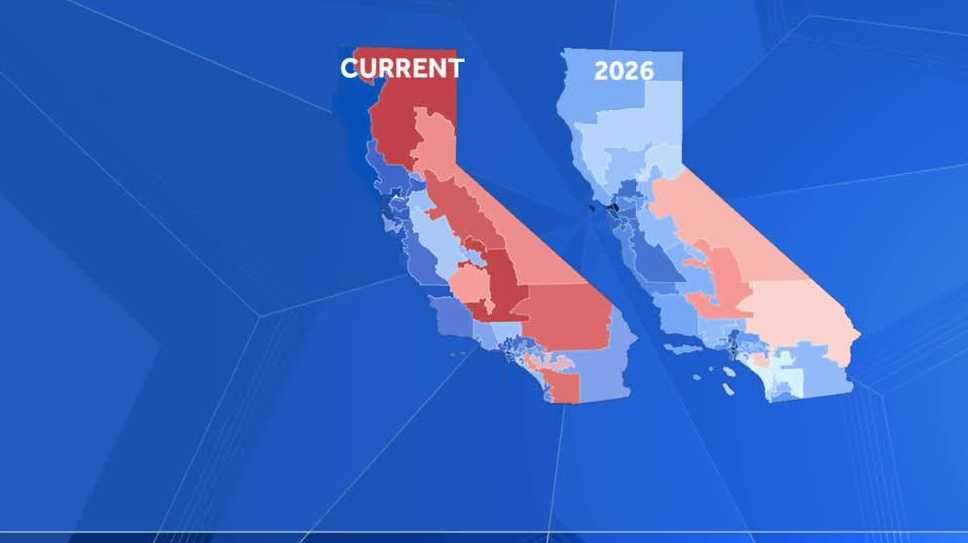
The congressional maps California voters approved last November to replace the state’s independent commission-drawn districts survived a federal court challenge in January, clearing the way for their use in the 2026 midterm elections — though the fight over how they came to exist remains a live political argument.
The maps trace back to Proposition 50, a measure state Democrats placed on a special November 2025 ballot after Texas Republicans, under pressure from the Trump administration, moved to redraw their own congressional maps mid-decade — well outside the normal once-per-census redistricting cycle. Governor Newsom framed California’s response explicitly as a countermove, arguing that if Texas could redraw maps for partisan advantage outside the normal cycle, California needed the ability to do the same. Voters agreed by a wide margin, approving Proposition 50 with roughly 64% support.
The new maps, developed based on work from the California Citizens Redistricting Commission but ultimately drawn through the legislative process Proposition 50 authorized, are designed to shift five congressional seats toward Democrats. They’ll remain in place through the 2030 census, at which point the independent commission resumes its normal role.
Predictably, the maps didn’t go unchallenged. The California Republican Party and the Trump administration sued almost immediately, arguing the new district lines amounted to racial gerrymandering — specifically that lines in Los Angeles and the San Joaquin Valley were drawn to benefit Latino candidates in ways that violated federal voting rights protections. A divided federal court rejected that argument in mid-January, ruling that the maps were legally drawn for partisan political purposes rather than as an act of racial discrimination — a distinction that matters because the U.S. Supreme Court has generally permitted states to redraw districts for partisan advantage, while racial gerrymandering remains prohibited.
The framing battle around Proposition 50 tells its own story about how contested this process was. Democratic campaign material branded it the “Election Rigging Response Act,” casting it as a defensive measure against what they described as an unprecedented Republican power grab tied to tariff policy and disaster aid disputes playing out at the federal level. Opponents rejected that characterization entirely, arguing California’s Democratic supermajority used the same mid-decade redistricting tactic they criticized Texas for, just in the opposite partisan direction — with the added twist of overriding the independent commission voters themselves created in 2010 specifically to take map-drawing out of legislators’ hands.
That last point is the one likely to resurface regardless of which party benefits in November. California voters created the Citizens Redistricting Commission specifically because they didn’t trust the legislature to draw its own districts fairly. Proposition 50 didn’t abolish that commission — it’s set to resume drawing maps after 2030 — but it did set a precedent that the commission’s maps can be set aside by a legislative vote and a statewide special election when a party in power decides the stakes justify it. Whether that precedent gets used again, by either party, in some future redistricting fight is an open question the courts didn’t have to answer this time.
For California voters, the practical impact shows up on their 2026 ballots directly: anyone whose congressional district changed under the new maps is voting for a new representative this November, even though the new district lines don’t formally take effect until January 2027. The current House member for a shifted district continues serving until that date, but the person voters choose this fall is who they’ll actually be represented by once the transition happens.
With the legal challenge resolved for now, the maps are set for this cycle. Whether they hold up through 2030, or invite another round of litigation tied to future census data, remains to be seen — but for the 2026 midterms, the boundaries are settled.