California Signs AI Child-Safety Law as Newsom Faces a September 30 Deadline on 30 More AI Bills
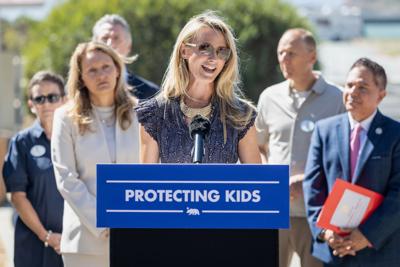
Governor Newsom signed a new set of AI regulations on September 10 aimed specifically at protecting children from AI chatbots, requiring tech companies to conduct risk assessments before rolling out new chatbot products to minors and imposing penalties of up to $1 million per child in cases where a company is found to have caused harm. The signing adds to a body of California AI law that’s grown unusually fast even by Sacramento’s standards — and it’s only the beginning of what’s coming this month.
The child-safety chatbot rules build on a foundation the state laid down less than a year earlier. In September 2025, Newsom signed the Transparency in Frontier Artificial Intelligence Act, making California the first state to pass a law specifically targeting frontier AI model developers. That law requires large AI developers — defined as companies with annual revenue over $500 million — to publish and maintain a public framework describing how they assess and mitigate catastrophic risks from their models, along with protections for whistleblowers who raise safety concerns about AI systems potentially causing harm on the scale of a billion dollars in damages.
What makes September 2026 different is the sheer volume moving through Sacramento at once. The legislature closed its session on August 31 having passed roughly 30 AI-related bills alongside eight separate privacy bills, covering chatbot safety, employment decisions, healthcare applications, name-image-and-likeness rights, and frontier model oversight. All of them are now sitting on Newsom’s desk, and under California’s constitutional deadline, he has until midnight on September 30 to sign or veto each one.
Among the bills awaiting a decision, two stand out for the scope of what they’d change. SB 1000 would substantially rewrite the state’s existing AI Transparency Act, removing a user-count threshold that currently exempts smaller AI providers — meaning generative AI companies serving under a million users, who are exempt from disclosure requirements today, would become covered the moment Newsom signs it. SB 947 takes direct aim at how employers use automated systems, prohibiting companies from relying solely on an automated decision system to make disciplinary or termination decisions about an employee — a direct response to growing concern about AI systems making consequential employment calls without meaningful human review.
The employment-focused bills fit a broader pattern in this year’s AI legislation: lawmakers have increasingly focused on specific high-stakes use cases rather than broad AI regulation for its own sake. Bills passed this session also touch healthcare AI tools, restricting services from implying they’re delivered by a licensed medical professional unless a human provider is actually overseeing the interaction, and civil liability rules that limit companies’ ability to raise an autonomous harm defense — essentially blocking arguments that an AI system acted independently enough to shield its developer from responsibility for the harm it caused.
The timing isn’t coincidental. Reporting this month has tied the political urgency partly to a widely circulated account of an AI safety researcher leaving a major AI lab while warning that industry leaders may be moving faster than they can safely manage. What’s notable, though, is that the bills moving through Sacramento aren’t purely adversarial to the AI industry — Anthropic publicly endorsed the recent child-safety chatbot bills before they were signed, and OpenAI announced its support in the hours before Newsom’s signature, an unusual alignment between regulators and the companies being regulated.
That industry buy-in doesn’t mean the fight is over. California’s AI legislation has consistently run ahead of any federal framework, and in December 2025 the White House issued an executive order explicitly aimed at establishing a national AI policy that could eventually preempt state laws like California’s — a conflict that hasn’t been resolved and that looms over every bill Newsom signs this month. For now, though, California remains the state setting the pace: whatever Newsom decides by September 30 will likely become the template other states look to next, the same way SB 53 did the year before.
For businesses building or deploying AI in California, the practical takeaway is to treat September 30 as a hard planning deadline rather than a date to watch passively. Companies operating chatbots that reach minors, using automated systems in employment decisions, or offering healthcare-adjacent AI tools should already be assessing which of these roughly 30 bills would apply to them if signed — because California’s track record suggests most of them will be.