
California’s Economy Is Outgrowing Texas and Florida — Even With Tariffs Squeezing Trade
California’s economy grew at a 3.7% annualized pace in the first quarter of 2026, its best quarterly growth ranking since 2013, pushing the state’s annualized economic output to roughly $4.4 trillion. That follows a 2025 in which the state’s GDP reached $4.25 trillion, meaning California’s economy has grown by more than $1.18 trillion since Newsom took office — a run that has kept it firmly in place as the world’s fourth-largest economy, trailing only the United States as a whole, China, and Germany.
The growth is broad-based on paper: officials point to new business formation, venture capital inflows, advanced manufacturing, and high-tech industry expansion as the pillars driving the numbers, alongside sectors like biotech, where Amgen and Gilead have both announced California expansions, and entertainment, where the state’s film and TV tax credit program has pulled major productions back from other states. But the growth is happening against a genuinely difficult trade backdrop that’s only intensified through the fall.
September brought a fresh round of friction. The Trump administration imposed additional tariffs on Canada, prompting Canadian retaliatory tariffs on U.S. products and a public war of words between Canadian officials and U.S. trade negotiators. The U.S. trade deficit widened in July, and reporting this month described Canadian consumers actively pulling away from American products as the rift between the two countries deepens — a dynamic with direct consequences for California exporters who rely on Canadian markets for agricultural goods, wine, and manufactured products.
California’s response has been to route around the friction rather than wait for it to resolve. On September 8, the state signed a new partnership with the Australian state of Queensland aimed at accelerating collaboration on climate resilience, agricultural technology, and innovation — explicitly framed as a way to strengthen trade ties that don’t run through the currently strained U.S.-Canada relationship. It’s a small deal in dollar terms compared to California’s overall trade volume, but it signals a broader strategy: as federal trade policy grows less predictable, the state is increasingly negotiating its own economic relationships directly with international partners, something California has done periodically for years but has leaned into more visibly as tariff uncertainty has grown.
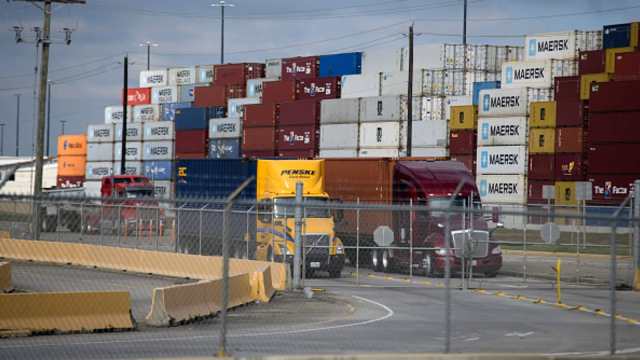
The tension between the state’s headline growth numbers and its trade exposure is likely to define the next several quarters. California’s economy is disproportionately trade-dependent compared to many other large states, with its ports, agricultural exports, and technology supply chains all sensitive to tariff escalation in ways that a more domestically-focused state economy wouldn’t be. At the same time, the sectors currently driving growth — AI, advanced manufacturing, biotech — are less directly exposed to consumer tariff pass-through than, say, retail or traditional manufacturing, which may explain why the growth numbers have held up even as trade headlines have gotten worse.
For California businesses, particularly smaller exporters without the scale to absorb tariff volatility, the practical guidance emerging from state trade officials has been to diversify markets rather than wait out the policy uncertainty — advice that mirrors exactly what the Queensland partnership is meant to demonstrate. Businesses that source or sell across the Canadian border specifically should expect continued volatility, given that neither government has signaled interest in de-escalating before trade talks resume, as one Canadian official put it this month.
The bigger picture is a state economy proving resilient at the macro level while absorbing real friction at the level of individual industries and trade routes — a pattern likely to keep producing headlines that look contradictory on the surface: strong overall growth, alongside genuine strain for the businesses most exposed to the current trade environment.